
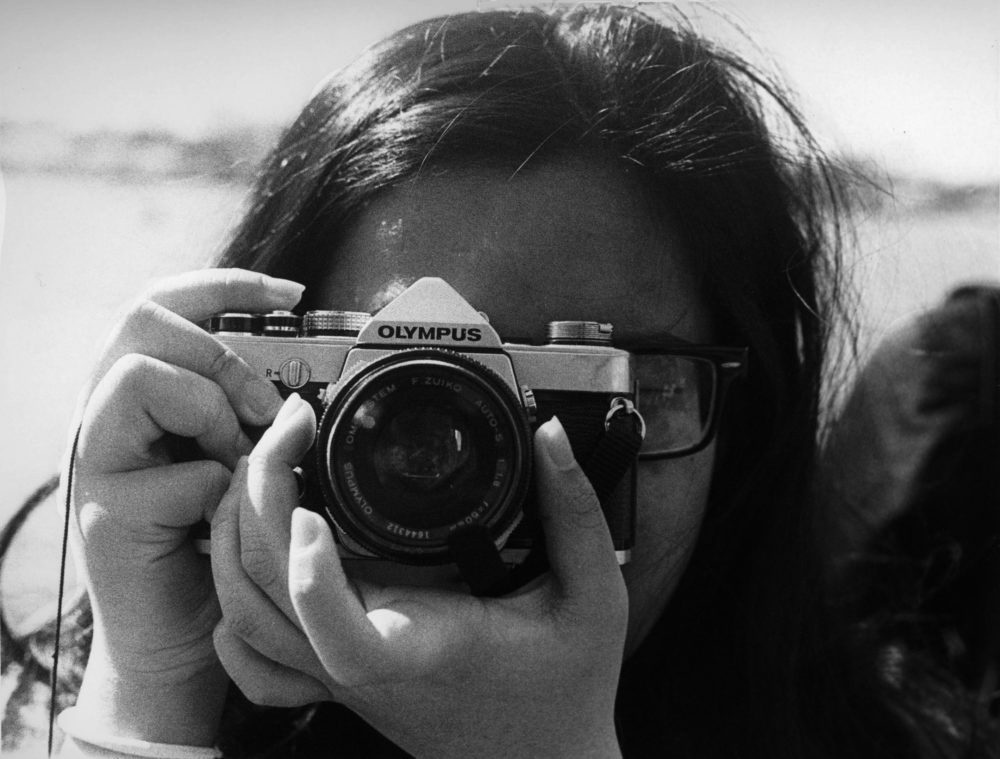
Art schools are sometimes very negatively stereotyped as institutions filled with starving artists where very little meaningful learning occurs, but if you were to talk to some of the students who plan on attending one of these institutions, they’d paint a very different picture.
“At art school it’s a lot more flexible” says Claire Hansen, ’16, who plans on majoring in photography. “Your freshman year you do have set classes you have to take, but in most of those classes you’ll have one class where you get your assignment, then you just work on it, and then you have critique classes. That, I feel, helps you grow more as an artist because you’re always getting feedback, and you’re always working on specifically art in some way.”
As far as grading goes, some schools, like The Pratt Institute and School of the Art Institute of Chicago, grade classes in a pass/fail system in order to encourage students to pursue their art and respect its highly subjective nature. Even at the schools that use a more traditional grade point average system, students are usually graded on technique over content which, according to Alex Hudome, ’16, who plans on studying either film and television or commercial music, can be “a good thing, maybe, to have letter grades to leave yourself room to grow and improve and see your progress.”
When asked about the issue of employment, Hudome believes that “people seem to think that art students can’t get jobs, but they can’t get jobs in the same way that English major students can’t get jobs, in the same way that history majors can’t get jobs, in the same way that communications majors can’t get jobs. There is no difference in difficulty, really. It just depends on timing and situation and how much you put yourself out there.” The statistics tell a slightly different, but not completely contradictory, story. A 2013 study conducted by the Strategic National Arts Alumni Project, an online survey and data management institution that focuses on art school education, found that 81% of art school alumni have worked in artistic occupations before and 60% do so currently.
Many schools put in extra effort to help subvert the starving artist stereotype. Some schools, like The Pratt Institute, have career offices that are open not only to current students but also to alumni. Some even make it so that, according to Hansen, “their professors are actually required to be part-time because when they’re not teaching they’re actually working in the industry, which is awesome because then at your critique or something they could bring a colleague that they work with to that critique to actually look at your work.”
Mrs. Katya Balaban, the Chair of the Stone Ridge Fine Arts Department and an Upper School visual arts and photography teacher, attended the Maryland Institute College of Art and says, “I’ve been very fortunate that I’ve been able to work in the field that I studied because I feel very passionate about the subject I am teaching, and of course, I’m also a practicing artist as well, but mostly it’s a very rewarding experience to see your students grow.”
At the end of the day, art schools are more similar to more conventional colleges than one may think. They’re a place in which people who are passionate about a certain subject can hone their skills and prepare themselves to dedicate the rest of their lives to something they love.
Leave a Reply