I recall sitting in Ms. Zindulis’ Introduction to Literature and Composition class as a First Academic, unexposed to so much of this world’s and our country’s injustice, and being asked whether or not banning books, or attempting to remove or restrict their accessibility, is fair. This conversation was sparked by Ray Bradbury’s Fahrenheit 451, which we read the summer before our First Academic year. Now, I dare each of you to consider–is banning a book, perhaps our most tangible, lasting testament to the freedom of expression guaranteed by the First Amendment, just? Should expression be repressed, especially in schools, from developing minds, simply because it’s considered unpopular or unorthodox?
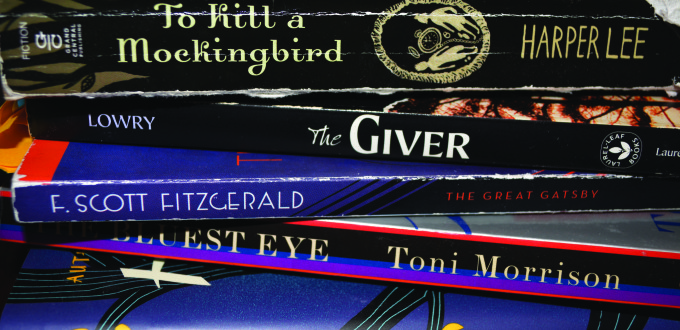
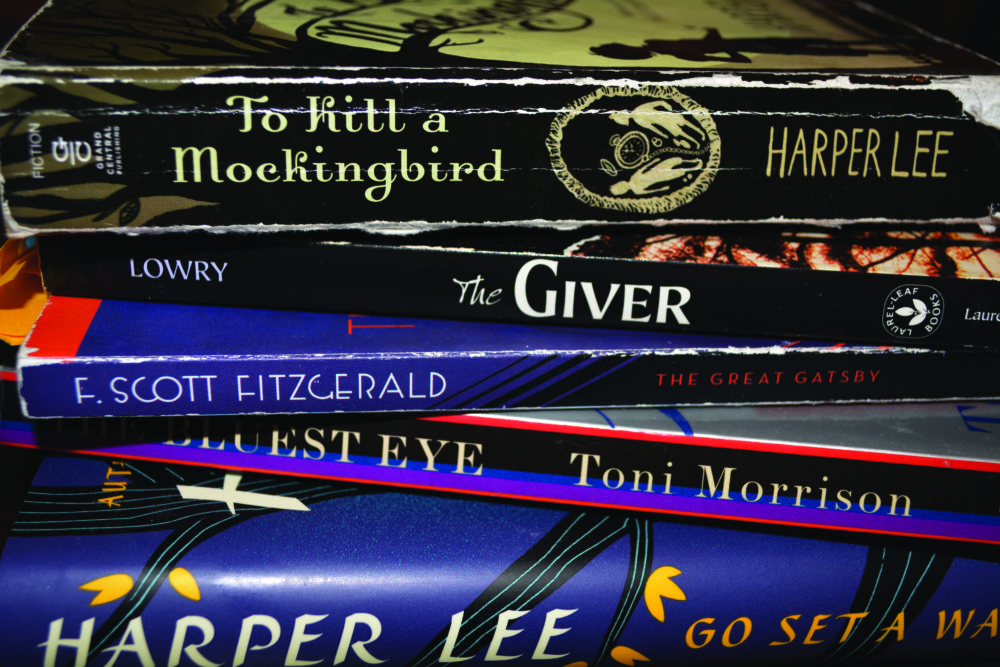
In fact, two books that shape the First Academic literature curriculum here at Stone Ridge are commonly banned elsewhere–Fahrenheit 451, about book-banning itself, and J.D. Salinger’s Catcher in the Rye, which according to critics, undermines morality. Even the Third Academic favorite, F. Scott Fitzgerald’s The Great Gatsby, has been banned because of its seeming promotion of a sexual, alcoholic lifestyle. In Cold Blood by Truman Capote, A Streetcar Named Desire by Tennessee Williams, and Their Eyes Were Watching God by Zora Neale Hurston, all read by Third Academics, serve as additions to the list.
And perhaps most surprising is Harper Lee’s To Kill a Mockingbird, the epitome of classic American literature, for, detractors argue, promoting white supremacy. By addressing the issue of white supremacy in the South at that time, I guess the classic thereby promotes it.
When asked her opinion of banning books in general, Ms. Fontanone sighs and says, “I’m going to cite one of my favorite English poets, John Milton.” I, in turn, sigh and reluctantly reply “okay,” because I know this answer is bound to be convoluted, and I did not intend to delve into a conversation about the author of Paradise Lost with Ms. Fontanone. She then refers to his 1644 treatise, Areopagitica, “which essentially was in response to [British] Parliament wanting to ban books and ban the press, [especially] Puritan propaganda.”
Areopagitica relates to banning books because it includes this “salient, most provocative idea that untested virtue is not true virtue. You can’t know good if you don’t know evil. How can you choose?”
The first thing I noticed when I first walked into Ms. Fontanone’s classroom on my first day of junior year was her enormous framed poster of the cover of To Kill a Mockingbird. And instantly, I knew that I was in the right place, with a teacher who I immediately knew shared one of my favorite literary works. Would Ms. Fontanone really be so blatantly advertising a racist book in her classroom?
She considers Harper Lee’s To Kill a Mockingbird “the canonical text that all high school students in America should read […] aside from Paradise Lost.” When asked whether she sees any racism or promotion of white supremacy, Ms. Fontanone pauses her speech, genuinely confused. Then she admits, “If you think of To Kill a Mockingbird’s historical context, […] it’s going to deal with sensitive topics, such as race, which are still relevant today […] It might present a gothic or grotesque picture of what the South was like, but that’s realistic […] Harper Lee isn’t actually gothic or grotesque–she’s just realistic. That’s the social fabric of its time.”
Our own English classes, most of which encourage Socratic thinking, therefore also inherently teach us how to think, as opposed to what to think. In accordance with Goal 2 of Sacred Heart education, our school promotes a deep respect for intellectual values–but also promotes developing those intellectual values on a personal level.
Ms. Bosco, Upper School Librarian, when asked if our school bans books, redirects the topic of conversation to the selection of books, rather than the banning of books. “There are tens of thousands of books published every year, and we only purchase a small fraction of those. So, we anticipate what may be appropriate for [the Upper School] library,” she explains.
Ms. Bosco personally does not believe in banning books from school libraries, “unless they’re truly inappropriate, such as the Fifty Shades of Grey books, which would probably never have been selected for inclusion in the first place. Any good librarian will naturally choose high-quality resources best suited for his or her community.” She believes that “part of the purpose of a library is to expose people to a variety of ideas and opinions […] Fiction is a way of [allowing] people to empathize with different characters and life experiences.”
Mrs. Heetderks, Upper School theology teacher, comments that “on a broad basis, the idea of banning books is problematic–that [a certain book] could never be in any hands at any time, which the [Catholic] Church once had. There was a list of banned books. Forbidding people at any age and at any time from reading a book is problematic.”
However, she supports “the idea of different communities and schools deciding the extent to which they would like to have offerings of books in their libraries or course curriculums, based on their understanding of students’ development and ability to process ideas and understand complicated issues on their own, in isolation.” She then proceeds to make the distinction that she does not think that that decision should be based on the concerns of parents. “There are educators and psychologists who have studied what is appropriate for students to learn. I don’t think parents are the best determinants of what should be [included] in a school as a whole, [though] they should be able to determine what their own children should and should not read.”
Attempts to scrub campuses clean of offensive words or ideologies have even spread to college campuses, which will doubtlessly affect current Fourth Academic students like myself. Are campuses being increasingly oversensitive? Is this oversensitivity due to a resurgence of political correctness? I believe that a line needs to be drawn between a safe space and an overprotective, underexposed one.
College campuses are currently using trigger warnings, or alerts that professors must issue if something in their particular course might trigger a strong emotional response. For instance, according to The Atlantic, it’s been argued that The Great Gatsby’s misogyny and physical abuse might trigger memories of past traumas for students and should therefore be avoided.
To me, banning books and employing trigger warnings only serves to stifle intellectual diversity and candid conversation and to unnecessarily shelter students, who should be able to decide for themselves whether or not to read literature. Ms. Bosco concurs, stating that “if someone doesn’t want to read [a particular book], he or she doesn’t have to.” And I agree with Lee in To Kill a Mockingbird that “the book to read is not the one that thinks for you, but the one which makes you think.” Isn’t that type of decision-making in accordance with Goal 5 of Sacred Heart education, personal growth in an atmosphere of wise freedom?
Leave a Reply